In 2026, Agriculture du Coin worked with HEC Montréal to cultivate two spaces on its campus: the Hectare urbain food forest and the library terrace. Here is how our work unfolded over the season.
Client: HEC Montréal
Service: Outdoor urban growing
Region: Montreal
Hectare urbain
Hectare urbain is an urban agriculture project coordinated by HEC Montréal’s [Direction de la transition durable]. It aims to raise awareness within the community about protecting biodiversity and adopting more responsible practices.
To learn more, visit the project page.

Our Work
Our mandate had three parts: bringing the food forest back into cultivation, setting up a vegetable garden on the library terrace, and looking after both sites throughout the season.
Assessing Before Planting
Our team began by visiting both sites to take stock of what was already in place, identify which areas were ready to grow and which needed clearing. We counted around sixty plant species. Knowing what already grows on a site means you don’t replace what works, and it guides every planting decision.

The Food Forest: Building on What Was There
Planted in 2014, the Hectare urbain food forest includes several areas: a spiral of herbs and edible flowers, growing beds, fruit trees and shrubs, and a native plant zone.
We worked across all four. Established plants, native species in particular, were kept and maintained rather than replaced.

A Fabric-Pot Garden on the Terrace
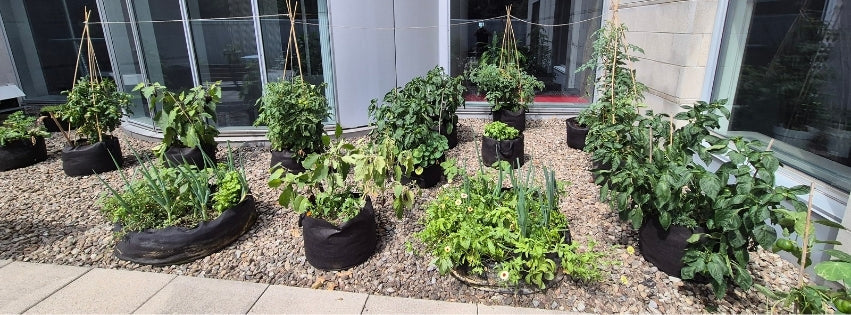
The library terrace was not suited to in-ground growing, so we designed the garden around fabric grow bags: lightweight, movable, and with no permanent fixtures. The fabric lets water drain and keeps roots aerated.
About 28 species were planted: leafy greens and root vegetables, fruiting vegetables, berries, herbs and edible flowers. That variety spread harvests from June into the fall.
Tending the Season
In midsummer, a garden changes from one week to the next: watering, pests, crops to pick at the right moment. Our team looked after both sites for the entire season.

The Harvest
Over the season, the two sites produced 250 pounds of produce (more than 110 kg), from the food forest to the library terrace garden. Every harvest was weighed at picking time to track production precisely week by week.
Does Your Site Have Potential?
Agriculture du Coin supports schools and institutions at every stage: assessing growable areas, design and setup, supplies, and seasonal maintenance. Get in touch to schedule a visit of your sites.